What Is Super Intelligence (SI)?
Super Intelligence (SI) is the name the U.S. executive branch now uses for systems long called artificial intelligence. What changed on September 29, 2026, and what your business should do.
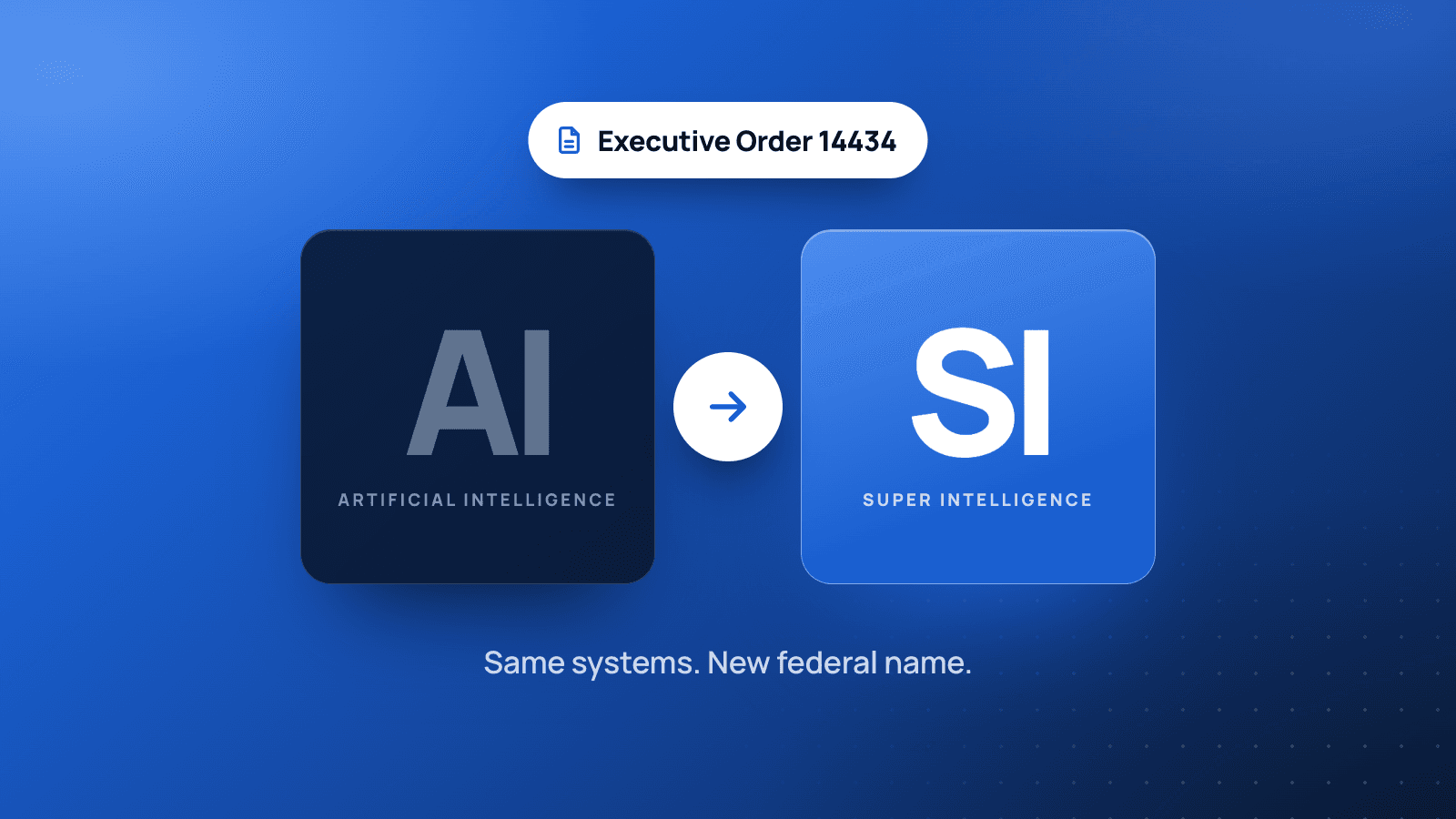
Super Intelligence (SI) is the term the U.S. executive branch now uses for the technologies and systems that federal law already calls artificial intelligence. It is a change in government wording. It is not, by itself, a new kind of software, and it does not require your business to stop saying AI.
On September 29, 2026, President Donald J. Trump signed Executive Order 14434, “Inaugurating the Era of Super Intelligence.” The order was published in the Federal Register on October 2, 2026 (91 FR 63129). To the maximum extent permitted by law, executive departments and agencies are directed to use “Super Intelligence” and “SI” instead of “Artificial Intelligence” and “AI” in official correspondence, public communications, websites, reports, policy documents, and other non-statutory documents. The order also says the executive branch will not acknowledge “Artificial Intelligence” and “AI” in any applicable setting.
What the Order Actually Covers
For purposes of the order, Super Intelligence and SI mean the technologies and systems encompassed by “artificial intelligence” in 15 U.S.C. § 9401(3). That statute describes a machine-based system that, for human-defined objectives, makes predictions, recommendations, or decisions influencing real or virtual environments. The order keeps that definition in place unless a later presidential action, consistent with law, or an Act of Congress replaces it.
A few limits matter if you are deciding what to change on a website:
- Private businesses are not under the order. It directs the executive branch. It does not require shops, software companies, publishers, or customers to drop the words artificial intelligence or AI.
- Old documents stay as written. The order does not require agencies to rewrite previously issued regulations, presidential actions, contracts, grants, or other historical documents.
- Statutes still say AI. An executive order does not amend the United States Code. Laws that say “artificial intelligence” still say that until Congress changes them.
SI Is Not the Same as a Superhuman Research Goal
People also use “superintelligence” for a hypothetical future system that would outperform human experts across almost every field. That idea is a research target. No such system is what Executive Order 14434 put into federal vocabulary.
Federal SI, as of this guide, is the administrative name for the systems already covered by the statutory definition of AI: chat tools, classifiers, forecasting models, and other software that predicts, recommends, or decides for a human-set goal. If a federal page says SI, read it as that category unless a later statute says otherwise. The everyday guide to those systems is still what artificial intelligence is.
November 28, 2026 Is a Proposal Deadline
Within 60 days of the order, the Assistant to the President for Science and Technology must send the President proposed legislative language for a federal definition of Super Intelligence and SI. That deadline is November 28, 2026. The proposal has to consider whether a new definition should modify, expand, or supersede the current statutory definition, and whether statutes that mention AI should be amended to match.
A proposal delivered to the President is not a new law. Congress would still have to act before the United States Code changes. Until that happens, treat SI as the executive branch’s name for today’s AI systems, and keep an eye on the definition rather than rewriting your site every time the term appears in a headline.
What a Business Should Say
Do not find-and-replace AI with SI across your site. Customers still search “AI,” software still ships with “AI” on the label, and Google’s results still mix both. A page that only says SI will miss the people using the older word. A page that only says AI will miss the people who heard the new one.
Use a sentence that ties the names together when the topic is the technology itself. For example: artificial intelligence (AI), which the U.S. executive branch now calls Super Intelligence (SI), is software that predicts, recommends, or decides for a goal a person set. Then go back to the words your customers use.
That connection is what search systems need. They match questions to pages by meaning, not by a single abbreviation. Spelling out both names once, in context, does more than repeating “SI” in every heading. The same rule applies to how results pages and AI answers pick sources: a clear definition beats a pile of keywords.
What This Does Not Change About Getting Found
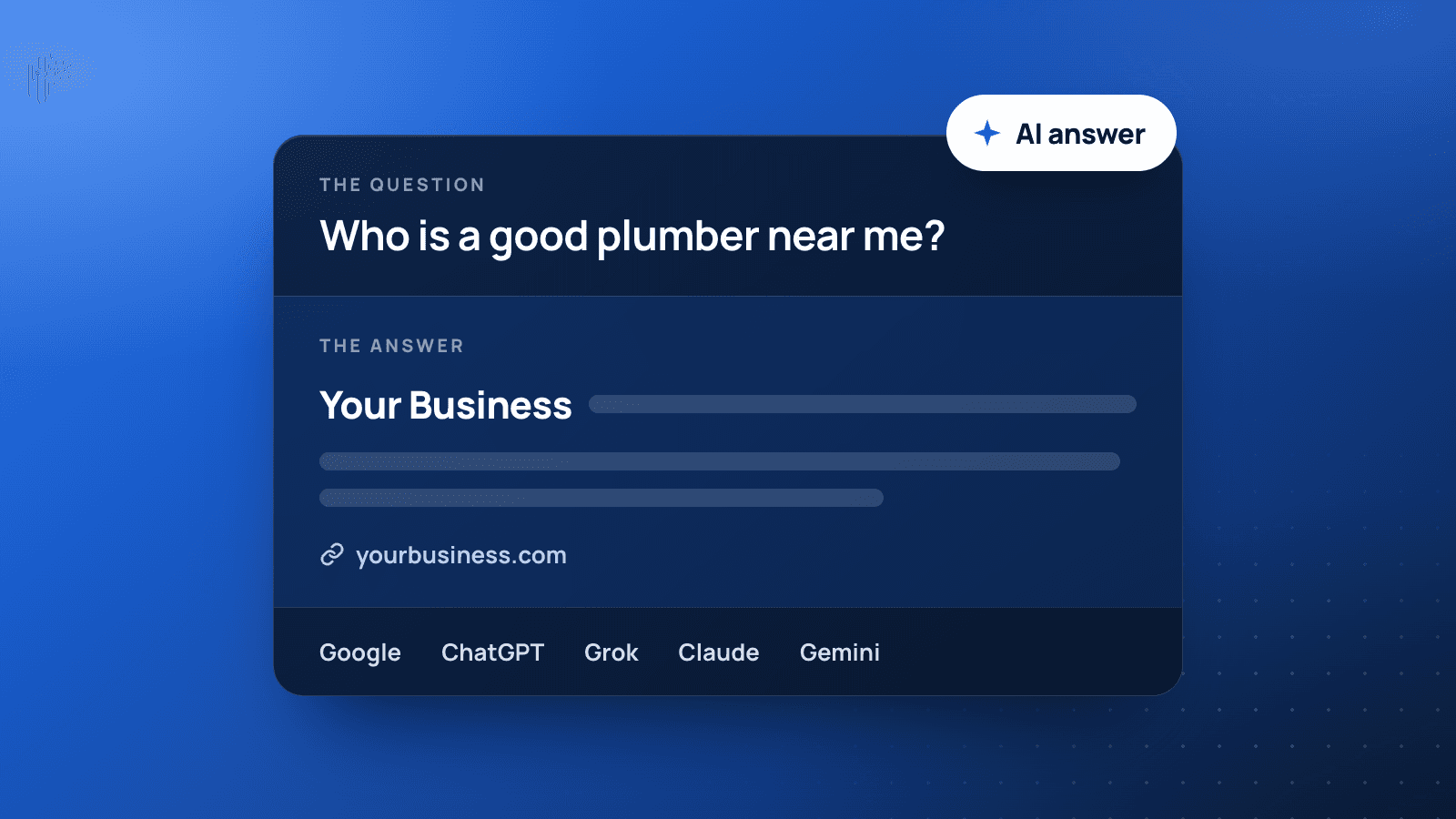
The order renames a category inside the executive branch. It does not change how a neighbor chooses a plumber, a clinic, or a shop. They still ask Google, ChatGPT, Grok, Claude, or Gemini a practical question, and they still call the business that sounds specific and trustworthy.
The work that earns that mention is unchanged: pages that answer real questions, facts that match your Google Business Profile, and a next step that is easy to take. BaseLynk helps with that through answer visibility and content and search.
If you want those pages written so both “AI” and “SI” point at the same accurate story about your business, contact BaseLynk.